
Traditional Catalan cuisine · Barcelona, 1929
Tradition, slow cooking and the memory of a city, served at the table.
A bohemian classic of the Raval
A memory of the old barrels
Farmhouse heritage
The eternal companion of long conversations
Roasted vegetable flatbread · Market dish from the fifties
Shredded salt cod salad
A bohemian favourite of the sixties
The chef's speciality and favourite · Minimum 2
Heritage of the Can Mosques barrels
Mediterranean freshness
A favourite of Peret and the Catalan rumba
A Christmas classic made from the roast
A seafaring dish from the old Raval
Iconic since 1929 · Slow-cooked veal head and trotter stew
Slow cooking and the flavour of a traditional inn
A traditional inn stew, rich and intense
Local produce from the Terres de l'Ebre
Pasture-grazed daily, Cusins selection
On the bone · approx. 370–400 g
A French touch from bohemian Barcelona
Vegetarian dish · Aromas of the forest and the Mediterranean
A tribute to the old barrels of salt cod
Barceloneta style
A slow-simmered Catalan fisherman's stew
Seasonal market produce · Thursdays only · Minimum 2 people · Price per person
A humble, timeless sweet
Fresh cheese · Pure Catalan countryside
A tradition of the Terres de l'Ebre
The house signature
Homemade flan, chocolate ice cream, toasted almonds and Cointreau
Vanilla · chocolate · carquinyoli · lemon · mandarin
Sweet wine · Alella
Sweet wine · Empordà
At Can Lluís, we are committed to honest cuisine and making each visit an authentic experience.
Traditional recipes prepared with fresh ingredients and respect for Catalan gastronomy.
Our team combines craftsmanship, care, and years of experience in home-style and market cuisine.
A lively space full of stories and personality, where every guest feels at home.
Friendly, attentive service that preserves the essence of a soulful neighbourhood restaurant.


A mix of olives to whet the appetite while you look at the menu.
Bread and olives is one of the simplest and oldest foods of the Mediterranean. In the Balearic Islands it is a slice of toast with oil and a handful of cracked or wrinkled olives; in Majorca some rub the olive over the bread until only the stone is left.
The Greeks and Romans probably ate them this way too, though nothing was written down. Simple, yes – but toast with oil and good olives is one of the best things there is.
Història de la cuina catalana i occitana by Vicent Marqués, vol. VIII.
An anchovy from L’Escala, a gordal olive and a piparra pepper on a cocktail stick. We make them in house, one by one.
The gilda was born in San Sebastián in the 1940s and takes its name from the film «Gilda», starring Rita Hayworth: green, salty and a little spicy, like the character.
Anchovy fillets from L’Escala, the same we use in the gilda and the escalivada coca. Served by the piece, two fillets each.
L’Escala, on the Costa Brava, has lived from anchovies and salt for centuries; the town even has a museum devoted to both.
The anchovy may be the finest salted fish of the Mediterranean, and all along the coast, from Nice to Alicante, it has been eaten the same way: on toasted bread with a drizzle of oil and a glass of wine. Around Castellón they also rubbed the bread with garlic and added a pinch of paprika.
Història de la cuina catalana i occitana by Vicent Marqués, vol. VIII.
Artisan farmhouse llonganissa by Pannon, thinly sliced, to nibble before your meal.
In eastern Catalan, the dry cured sausage is simply called «llonganissa». Bread with sliced llonganissa is a snack as old as cured sausages themselves: the Greeks and Romans already ate it.
The first mention in Catalan comes from the Baron of Maldà, whose diary Calaix de sastre records that on 23 April 1810, on the way to Montserrat, he stopped his party to eat mountain llonganissa, bread and a swig of good wine before carrying on.
In Roussillon and everywhere else, bread with llonganissa and a glass of farmhouse red has always meant a happy afternoon.
Història de la cuina catalana i occitana by Vicent Marqués, vol. VIII.
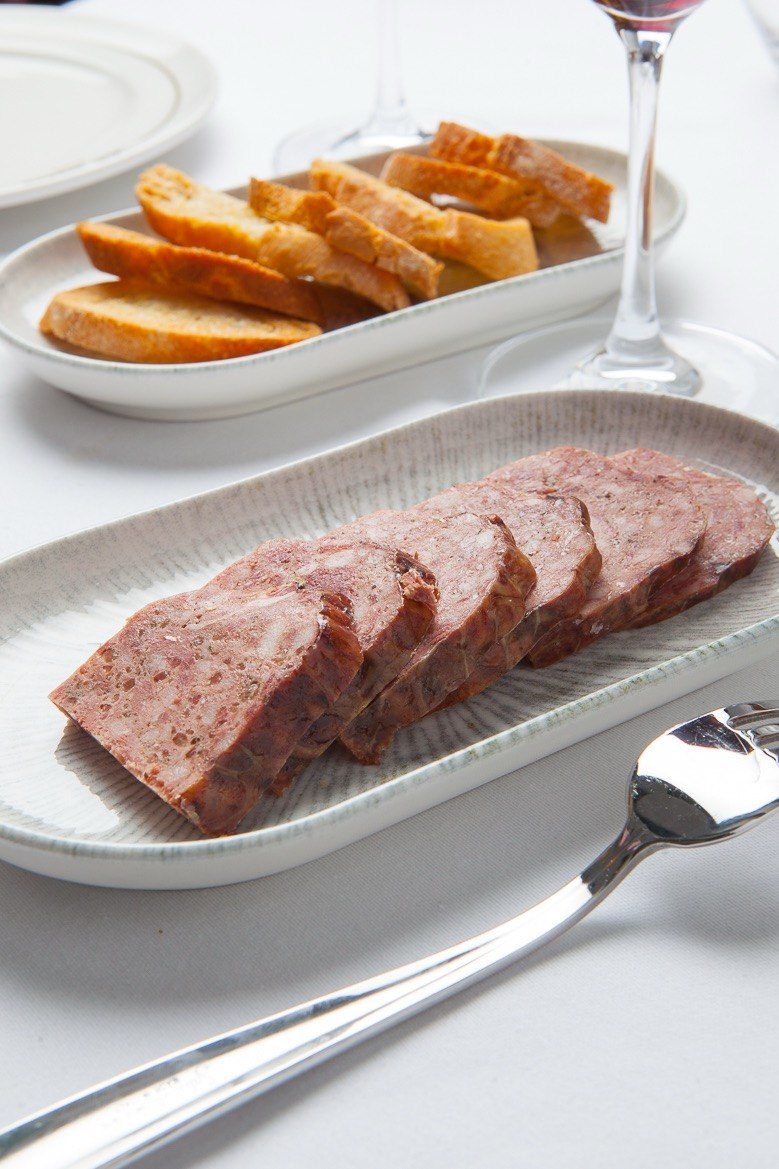
Pa de fetge, the classic country-style pâté, with toasted bread.
Pa de fetge («liver bread») is made all across the Pyrenees, from Ribagorça and Pallars to Roussillon and the Empordà. It is a pork pâté: liver, lean meat and belly in almost equal parts, with egg, garlic, parsley and a splash of brandy, baked in a water bath in a terrine covered with caul fat.
It was a festive dish of the pig-slaughter days, and it has to rest until the next day. It may have come from Occitania, where it is made everywhere too. It is sliced and eaten on bread, plain or toasted.
In the Val d’Aran a version is made in sealed jars with a bay leaf on top, cooked in a water bath. The secret of them all: the water must never boil, or the pâté turns hard.
Història de la cuina catalana i occitana by Vicent Marqués, vol. VIII.
La cuina catalana. 800 receptes by Josep Lladonosa.
Rampoina ullada by Pa Solà: a small, very light and crusty roll, handmade with sourdough and no additives.
Pa Solà is a line of bakers going back to 1615, when the Can Solà farmhouse in Sant Boi de Lluçanès, the first house in the village with a wood-fired oven, baked bread for all its neighbours.
Today they bake in Cabrera de Mar, in the Maresme, for restaurants only, with flour, water, yeast, salt and time. Since 1972 they have made small rolls designed for the restaurant table.
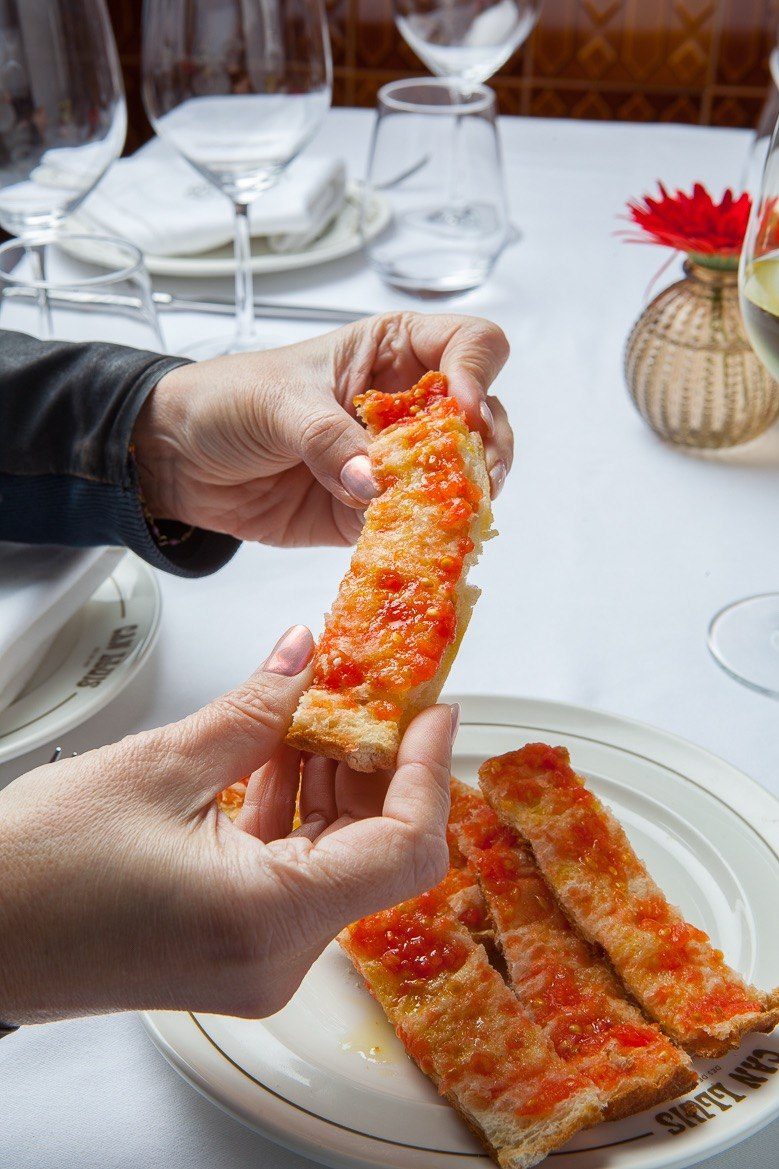
We make it with coca bread, thin and crisp, toasted, with tomato, olive oil and salt. It comes to the table cut into strips, to eat with your fingers alongside everything else: the anchovies, the cured sausage, the pâté or the fritters.
Contains gluten. We have gluten-free bread: just ask our staff.
Olive-oil coca bread by Pa Solà, handmade with sourdough and a high hydration: it stays crisp once toasted, right through the meal.
This is not an ancient dish: tomatoes came from the Americas, and bread with tomato is perhaps two centuries old. The first written record dates from 1884: the writer Pompeu Gener tells a friend, in a letter in verse from Paris, that bread with oil “amanit amb tomaca” (dressed with tomato) had become fashionable there, and that even the great Sarah Bernhardt had made herself a slice. The same year it turns up in a Barcelona stage play, La taberna.
According to a theory by the food writer Nèstor Luján, it was born in the countryside in a year of plenty, when someone rubbed tomato onto bread that was going dry so as not to waste it. It used to be a summer dish; in winter it was possible thanks to hanging tomatoes, tied in bunches and kept hanging for months. For a long time farmhouses kept them for themselves and they were not even sold at market.
The rules are few but firm: good bread, ripe tomato rubbed on by hand (never tinned or blended), oil and salt. The rest is argument: the poet Narcís Comadira jokes that there are only two kinds of Catalans, those who rub the bread on one side and those who rub it on both. Manuel Vázquez Montalbán, in La cocina de los mediterráneos, settles it in four lines: bread, tomato, oil and salt.
Coca flatbread with escalivada, L’Escala anchovies and olive paste. The same anchovies we use in the gilda and as fillets.
Escalivar means roasting vegetables over a high flame or on embers until the skin chars. The word comes from «caliu», the glowing embers of the hearth. It is a summer, farmhouse dish; onion, so common in escalivada today, was only added in the 1970s.
The word «coca» is recorded since at least the 14th century, in the writings of the friar Francesc Eiximenis. Cocas have always been tied to feast days: topped with fish in Lent, with meat the rest of the year.
Coca de recapte is the flatbread of central and western Catalonia: rectangular, the size of an oven tray, topped with the «recapte» – whatever provisions are in the house. Pastry makers once baked it with roasted pepper, aubergine or artichoke for Fridays, when meat was not allowed; once herring and sardines came into use, Friday became just another working day.
With anchovies on top, in many places it is called coca d’anxoves. In Roussillon there is a round one with anchovies and black olives: garden and sea in one bite, like ours.
The most traditional coca de recapte carries herring over the roasted vegetables; where there is none, llonganissa takes its place.
Cuina catalana by Borja Sierra and Òscar Gómez (Montagud Editores); Història de la cuina catalana i occitana by Vicent Marqués, vol. VIII.
La cuina catalana. 800 receptes by Josep Lladonosa.
Seasonal tomatoes with tuna belly, gordal olives and piparra peppers. A fresh dish to share.
Interestingly, in a 1971 Catalan cookbook the «Catalan salad» is esqueixada: tomato, spring onion, olives and salt cod. Ours keeps that spirit – tomato, olives and preserved fish – with tuna belly instead of cod.
La cuina d’avui by Glòria Baliu de Kirchner (Editorial Laia, 1971).
We make it with shredded Gardell salt cod, Figueres onion, hanging tomato and black olives, dressed with olive oil. We serve it cold.
Contains fish. If you have an allergy, please tell our staff.
The name comes from the Catalan verb esqueixar: to tear with your fingers. The cod in an esqueixada is never cut with a knife; it is shredded by hand, and that is what gives it its texture. It is a country dish and a summer one, bringing together the fish that keeps best and the best tomatoes of the year.
Salt cod reached Catalonia from the North Atlantic: from the 17th century, Catalan wine and brandy were traded for salted fish from northern Europe. The first salt cod recipe in Catalan dates from 1835, in La cuynera catalana, and Lent did the rest. Hence a very local trade: market stalls that sell the cod already soaked and ready to use.
The classic recipe, as recorded by the chef Josep Lladonosa, takes cod, tomato, onion, black olives and oil, and is served cold. Manuel Vázquez Montalbán, in La cocina de los mediterráneos, adds pepper and green olives. Add cooked pulses and it becomes another dish: empedrat.
Raw beef prepared to order with egg yolk, shallot, capers, gherkins, Dijon mustard and Worcestershire sauce, served with toasts.
Steak tartare has been in Catalan kitchens for more than fifty years. A 1971 home cookbook already makes it with egg yolk, onion, parsley, capers and a touch of brandy, mustard and Worcestershire sauce, raw and well chilled, with lettuce or escarole – and insists that presentation matters a great deal.
La cuina d’avui by Glòria Baliu de Kirchner (Editorial Laia, 1971).
Homemade ham croquettes, creamy béchamel inside and a crisp coating. Ordered by the piece.
The first croquette recipe written in Catalan appeared in 1923, in the cookbook La cuina catalana by Josep Cunill de Bosch (pen name of the bookseller Francesc Puig i Alfonso). Croquettes were then a dish of the city’s middle-class kitchens.
Ham croquettes probably came from elsewhere in Spain, but they settled here so long ago that today they are among the most common on any Catalan table. In Barcelona they have always been nicknamed «cruquetes».
At home they were also made with leftovers from the stew pot: chicken, hen or veal, chopped and bound with béchamel. A croquette shaped by hand, one by one, is a different thing from a frozen one.
Catalan homes have always also made them with chicken or roast leftovers, chopped very fine, just like the ham.
Història de la cuina catalana i occitana by Vicent Marqués, vol. VIII.
La cuina catalana. 800 receptes by Josep Lladonosa.
Homemade red prawn croquettes, creamy béchamel inside and a crisp coating. Ordered by the piece.
The first croquette recipe written in Catalan appeared in 1923, in the cookbook La cuina catalana by Josep Cunill de Bosch (pen name of the bookseller Francesc Puig i Alfonso). Croquettes were then a dish of the city’s middle-class kitchens.
Ham croquettes probably came from elsewhere in Spain, but they settled here so long ago that today they are among the most common on any Catalan table. In Barcelona they have always been nicknamed «cruquetes».
At home they were also made with leftovers from the stew pot: chicken, hen or veal, chopped and bound with béchamel. A croquette shaped by hand, one by one, is a different thing from a frozen one.
Història de la cuina catalana i occitana by Vicent Marqués, vol. VIII.
We open the urchins, gratinate them in the oven in their own shell until golden and serve them on a bed of coarse salt. They are ordered by the piece, with a minimum of two.
The garota, as it is called in Catalan, is the Mediterranean sea urchin. On the Catalan coast, and above all in the Empordà, it is a much-loved winter delicacy: what you eat is the coral, the five orange tongues inside the shell, with an intense taste of the sea. It is gathered by hand under strict rules, and every winter towns such as Palafrugell hold a festival in its honour, the Garoinada.
We make them with flaked salt cod, garlic and parsley. We cook the cod gently with the garlic and parsley, work in the flour until the dough comes together and, once it has cooled, add the eggs two at a time. There is no potato: these are salt cod fritters and nothing else. We fry them to order and serve six.
Salt cod fritters, bunyols de bacallà, are a softer cousin of the salt cod croquette and seem to have been born in the inns and taverns of Barcelona, spreading from there across Catalonia. Their first appearance in writing is in 1864, in a comic play by Serafí Pitarra that is set, fittingly, inside a tavern.
In the nineteenth century Barcelona’s taverns put them out in the morning next to the dish of allioli, and later they were sold in the street: the folklorist Joan Amades describes breakfast sellers going round the markets and factory gates with big baskets of fried cod and fritters. A poem from 1890 already places them at the Ninot market.
They are Lenten food, from the days when meat was forbidden, but salt cod kept all year round, which is why they are eaten in every season. The batter is usually flour and eggs, sometimes with potato. Manuel Vázquez Montalbán recorded a close relative: Catalan-style salt cod meatballs.
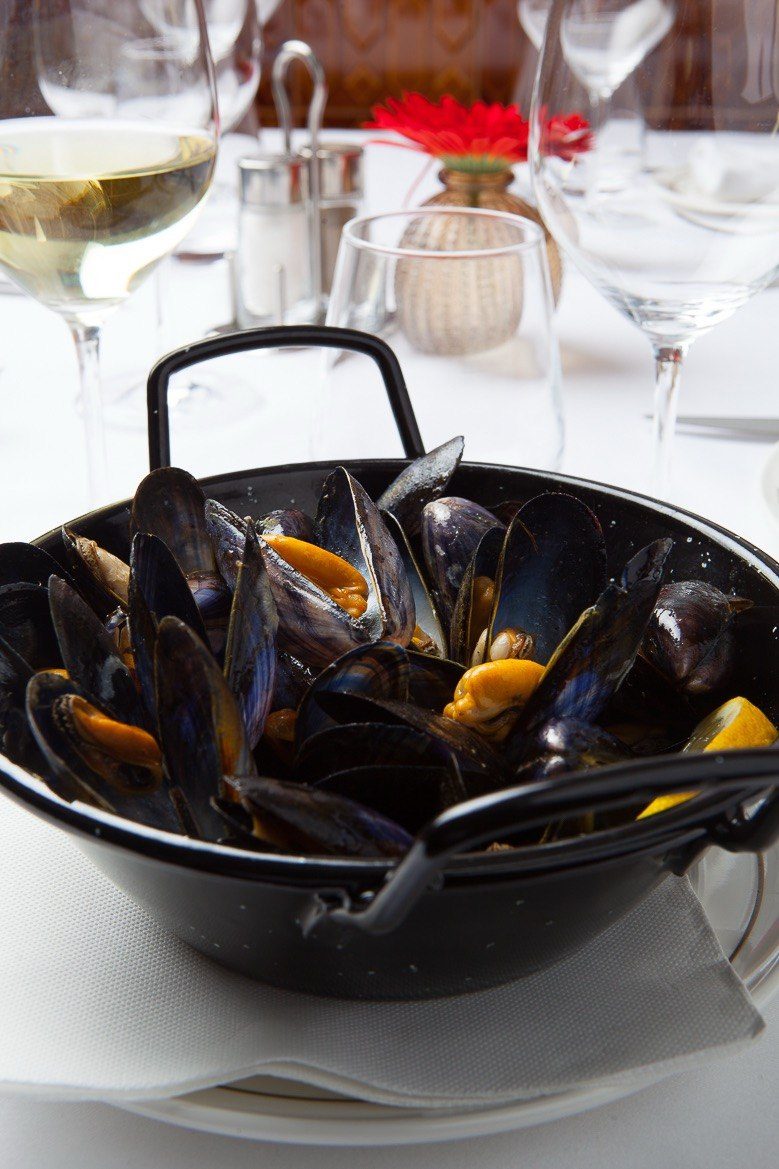
Steamed mussels with citrus and white wine. As they cook, the mussels open and release their own juice: an intense broth that smells of the sea.
In Catalonia mussels are farmed in the Ebro Delta, in the bays of El Fangar and Els Alfacs, where river and sea water bring them plenty of food. A single mussel filters up to six litres of water an hour.
Mussels are affordable and so often underrated, but truly good ones are not easy to find. The secret is not to overcook them and to pair them with flavours that bring out their salty, iodine taste.
Cuina catalana, by Borja Sierra and Òscar Gómez (Montagud Editores).
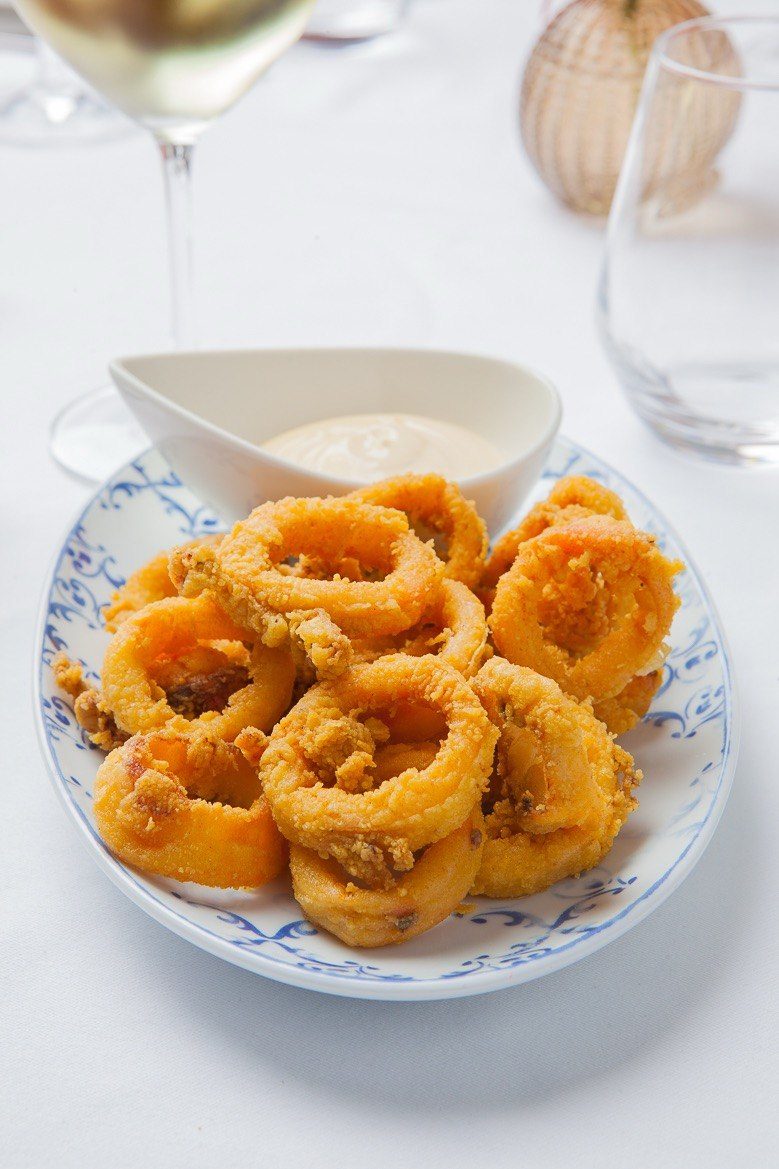
We use Spanish squid, dust it in flour and fry it Andalusian style until crisp outside and tender inside. We serve it with a citrus mayonnaise for dipping.
In Barcelona, fried squid is a bar and tavern classic, the sharing dish that is always on the table. The secret is the produce: fresh squid and a clean, quick fry.
At Can Lluís we use bover snails. We stew them with spicy chorizo and cured pork belly on a sofregit of onion, pepper and tomato, moistened with meat stock. We add sweet pimentón de la Vera and a little chipotle chilli, which gives a gentle, smoky heat. It is a dish made for mopping up with bread.
Our snails come from Marc Molleja, who raises them in Vilassar de Mar, on the Maresme coast just north of Barcelona, and feeds them on herbs and natural produce. In the kitchen we first boil them with aromatic herbs, then finish the cooking with chorizo and cured pork belly, so they take on all the flavour of traditional cooking.
Snails are among the oldest foods we have: people have eaten them since prehistory. The Romans already farmed them, and in the Middle Ages they stayed on the table as food for Lent and for Fridays, when meat was forbidden. In the nineteenth century they reached grand tables: the story goes that Talleyrand had Carême cook a dish of snails to impress the Tsar of Russia.
Catalan cooking has always prized the cargol bover, the common garden snail, for its plump, juicy meat. It is cooked a la llauna (on a metal tray), over embers or stewed, nearly always starting from a sofregit and often finished with a picada, and it is paired with rabbit, pig’s trotters or cured sausage. It is a dish for feast days and village gatherings, but also for inns and taverns.
They are eaten with the fingers, picked out of the shell with a pin or a toothpick, with bread to mop up the sauce. Tradition wants them spicy and with wine on the table. The Catalan sayings put it plainly: «Si vols menjar cargols bons, amb força salsa i picantons» (for good snails, plenty of sauce and a bit of heat) and «Cargols sense vi, no els vull per a mi» (snails without wine are not for me). And one more: «Pel maig, els cargols a raig» – in May, snails by the bucketful. Fittingly, May is when Lleida holds the Aplec del Cargol, a huge gathering devoted to eating them, during its main festival.
Manuel Vázquez Montalbán, who wrote Can Lluís into his Pepe Carvalho stories, included in La cocina de los mediterráneos a dish of “cargols llepats”: snails stewed on a sofregit of onion and tomato with pork belly and botifarra sausage, which he says should taste both sweet and spicy. The same book has pig’s trotters with snails, the pairing behind our own trotters dish.
Artisan Iberian botifarra with Santa Pau beans and allioli: one of the most recognisable dishes of Catalan cooking, made from simple farmhouse produce.
Raw botifarra, in its purest form, is lean pork seasoned with salt and pepper and nothing else. Fuet, espetec and the llonganissa of Vic all belong to the same family.
In the nineteenth century the beans were usually paired with pork loin, not botifarra. The first written mention of beans with botifarra dates from 1893; since then the dish has become a symbol of Catalan cooking, tied to traditional inns, farmhouses and hearty knife-and-fork breakfasts.
Santa Pau beans grow on the volcanic soils of the Garrotxa: small, tender and thin-skinned, with their own designation of origin. They have been grown there since the eighteenth century.
In the Vallès and the Maresme the dish is made with ganxet beans, small and very thin-skinned, and called «botifarra amb seques». The bean nearly disappeared in the late 20th century and was granted EU Protected Designation of Origin in 2012.
The classic inn-style way: the sausage is fried in pork-belly fat, and the boiled beans are sautéed in the pan until golden – the famous «mongetes saltades» – topped with crackling and parsley.
Cuina catalana, by Borja Sierra and Òscar Gómez (Montagud Editores).
La cocina de los mediterráneos by Manuel Vázquez Montalbán.
The filling is roast chicken with well-browned onion and a splash of brandy. The sauce is what sets it apart. There is no béchamel: we make it with prunes and dried apricots, slow-cooked onion, chicken stock and a splash of brandy, the same dried fruit that goes with Catalan-style roast chicken. Pine nuts go on top.
Contains gluten, egg and pine nuts. If you have an allergy, please tell our staff.
Cannelloni were born in Italy and reached Barcelona in the 19th century with the Italian cooks working in the city. According to the food writer Néstor Luján, they were first served at the Beco del Racó inn, a meeting place for the city’s bourgeoisie. For years they were a treat for well-off households, because the pasta had to be made by hand.
Catalonia made the dish its own: the Italian tomato sauce gave way to béchamel, and the filling came to be made with roasted meat. In the first half of the 20th century, dried pasta from the El Pavo brand took it into every kitchen, and on the morning of St Stephen’s Day (26 December) families gathered to chop the meat left over from Christmas and roll the cannelloni. As the Catalan saying goes, “Sant Esteve, dia de canelons, per conservar tradicions”: St Stephen’s, the day for cannelloni, to keep traditions alive.
The chef Josep Lladonosa sums it up: every house has its own formula. Manuel Vázquez Montalbán, in La cocina de los mediterráneos, gives the classic version, with béchamel and a touch of tomato. Ours is this one: roast chicken, prunes, dried apricots and pine nuts.
We make them with minced veal, pork and cured pork belly, bread soaked in milk, egg, garlic and parsley. We dust them in chickpea flour, fry them and finish them in the pot over a low heat with cuttlefish, peas, tomato and slow-cooked onion. They come out soft and with plenty of sauce: ask for bread.
Meatballs are as old as written cookery. The Romans already made them: they called them isicium, from the verb to chop, and the cookbook of Apicius, from the first century, has around twenty recipes. With no mincing machines, the meat was chopped by hand, which made them food for wealthy households.
The name comes from Arabic: al-búnduqa gave Castilian albóndigas and, from there, Catalan mandonguilles, already found in writing in the seventeenth century. In Catalonia they are made with pork and veal mixed, fried and then stewed with a sofregit; in Barcelona they are known as “mandonguilles amb suc”, meatballs with sauce. With peas they are a spring stew, when peas are in season, and in Barcelona they are made, like ours, with pork, veal and cured pork belly.
They are inn food too. The folklorist Joan Amades records that in early twentieth-century Barcelona fifteen cèntims bought a choice of offal, fricandó or meatballs in sauce. And Manuel Vázquez Montalbán, who wrote Can Lluís into his Pepe Carvalho stories, stood up for the soft meatball, made with breadcrumb and egg, against the kind that turns out hard as a stone.
The pairing in our dish is in Montalbán’s La cocina de los mediterráneos too, as “sepia con albóndigas”: cuttlefish cooked on a sofregit of onion and tomato, pork meatballs made with bread soaked in milk, and a picada of almonds to finish.
Cap i pota means “head and foot”: tender, gelatinous meat from the parts of the calf that nobody used to want. At Can Lluís we cook it slowly with chistorra sausage and chickpeas from Sant Antoni until the sauce is thick and glossy.
On our menu we call it “iconic since 1929”: it is one of the spoon dishes that define the house.
Offal (head, trotters, tripe, tongue) has been part of Catalan cooking since the Middle Ages: it appears among the first recipes in medieval Catalan cookbooks. It was the cooking of thrift: when an animal was slaughtered, nothing was thrown away.
The cuts the wealthy did not want became the “esmorzar de forquilla”, the hearty fork breakfast of farmers who went to the weekly markets and stopped at the old inns, the fondes. Cap i pota comes from that world, and together with pig’s trotters it is the most popular offal dish in Catalonia.
The classic recipe starts with a slow sofregit of onion and tomato and finishes with a picada; some cooks use almonds and saffron, others pine nuts and vi ranci. Manuel Vázquez Montalbán, who brought Can Lluís into his Pepe Carvalho novels, gives two versions in La cocina de los mediterráneos: one with samfaina and another with ham, chorizo and chilli.
Pork cheek cooked slowly at low temperature for hours, until it falls apart under the fork. Served with mushrooms and potato parmentier.
Cheek (galta) is a humble cut of popular cooking – and that is exactly why it is so good. It has two textures: the firm outer muscle and the inner side, full of collagen. With long, patient cooking the collagen melts and the fibrous meat turns tender and silky.
It is not a difficult dish, it just asks for time: a few hours over a low flame, hardly touched. Unlike elsewhere in Spain, in Catalonia we also like to roast cheeks so they pick up the toasted notes of the oven; traditionally they come with chips or a good mash.
In Catalan cooking pork cheeks are mostly done in the oven: first browned, then onion, tomato, herbs – thyme, bay, marjoram – and a splash of white wine go in, and they cook slowly in stock until meltingly tender. Some finish them gratinated under a layer of mild allioli.
Cuina catalana by Borja Sierra and Òscar Gómez (Montagud Editores).
La cuina catalana. 800 receptes by Josep Lladonosa.
The pig’s trotters are slow-cooked until tender and gelatinous, then finished in the stew with the snails, in a thick sauce made for mopping up with bread. A spoon dish for a long, relaxed meal.
Pig’s trotters come from the traditional pig slaughter, the matança: nothing went to waste at home, and the trotters, full of gelatine and flavour, were stewed slowly. Snails, gathered after the rain, are one of the best-loved products of Catalan cooking; Lleida even has its own snail festival, the Aplec del Caragol. Together they make a hearty country stew, the classic cooking of Catalan inns.
We bread the kid goat and fry it until crisp outside and tender inside. We serve it with green peppers and cherry tomatoes.
Rasquera is a village in the Ribera d’Ebre, in the Terres de l’Ebre, with a long shepherding tradition. The white Rasquera goat is a native breed that grazes in the mountains, and its kid is one of the most prized products of the area. In Catalan cooking, kid goat is a festive dish: roasted, stewed or, as here, breaded.
Our kid goat and our mató (fresh goat’s cheese) come from Artagro, a dairy goat farm on the road from Rasquera to El Perelló, in the Terres de l’Ebre. The herd grazes among centuries-old olive groves, with views of the Cardó and Tivissa ranges, and the farm makes its own artisan cheeses. For us it is the best example of local produce: we know where it comes from and who looks after it.
Empordà lamb terrine with dried figs and quince sauce. Lamb grazed outdoors every day, from the Cusins selection.
In Catalonia lamb has always been roasted in the oven, while kid was kept mostly for the grill and mountain stews. Roast lamb is a festa major dish: in many villages it is the lunch of the patron saint’s day.
It is cooking with very little handling – garlic, hanging tomatoes, thyme, a splash of vi ranci and the oven – so the quality of the meat is everything.
A 1971 home cookbook roasts leg of lamb in a gentle oven, basted with oil, brandy and lemon – the same love of tender, fragrant meat.
Cuina catalana by Borja Sierra and Òscar Gómez (Montagud Editores).
La cuina d’avui by Glòria Baliu de Kirchner (Editorial Laia, 1971).
We cook the steak to your liking, slice it and serve it with potatoes and vegetables. It comes on the bone, about 370–400 grams.
Ageing beef is an old butcher’s craft: over weeks of rest the meat loses water, concentrates its flavour and becomes more tender. Thirty days gives the steak an intense taste while keeping it juicy.
Seared beef fillet with Café de París sauce and potatoes.
Café de París sauce is a herb and spice butter born in Geneva in the mid-twentieth century that became a favourite of French bistros.
In the 1970s, fillet steak was the dish for special occasions at home: hundred-gram medallions per person, seared on the griddle and kept rare, served at once on toast so they would not cool.
La cuina d’avui by Glòria Baliu de Kirchner (Editorial Laia, 1971).
Oven-roasted aubergine with truffle oil, smoked cheese, sun-dried tomato and pine nuts. Our vegetarian dish on the menu.
Baked aubergine is a classic of Catalan home cooking. Cookbooks from half a century ago already halve it, hollow it out, stuff it and gratinate it in the oven – the starting point for ours, which today is vegetarian.
La cuina d’avui by Glòria Baliu de Kirchner (Editorial Laia, 1971).
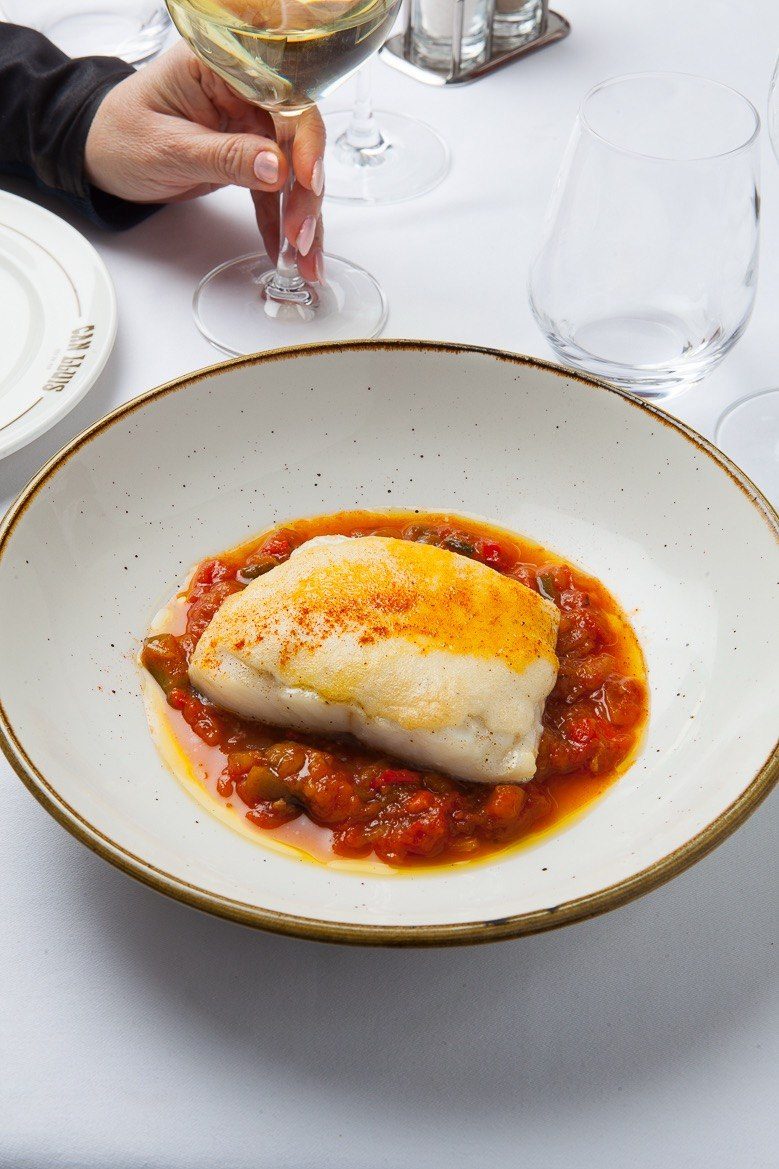
We use Gardell salt cod loin. We serve it on samfaina, the slow-cooked mix of onion, pepper, aubergine, courgette and tomato that is one of the foundations of Catalan cooking, and top it with allioli, gratinated until golden.
Salt cod came from the North Atlantic and kept for months in salt, which made it one of the best-loved fish in Catalan cooking and the dish of Lent, when meat was forbidden. On our menu we call it “a tribute to the old barrels of salt cod”, remembering the days when cod reached shops and inns in barrels, packed in salt. Salt cod with samfaina is time-honoured home and inn cooking.
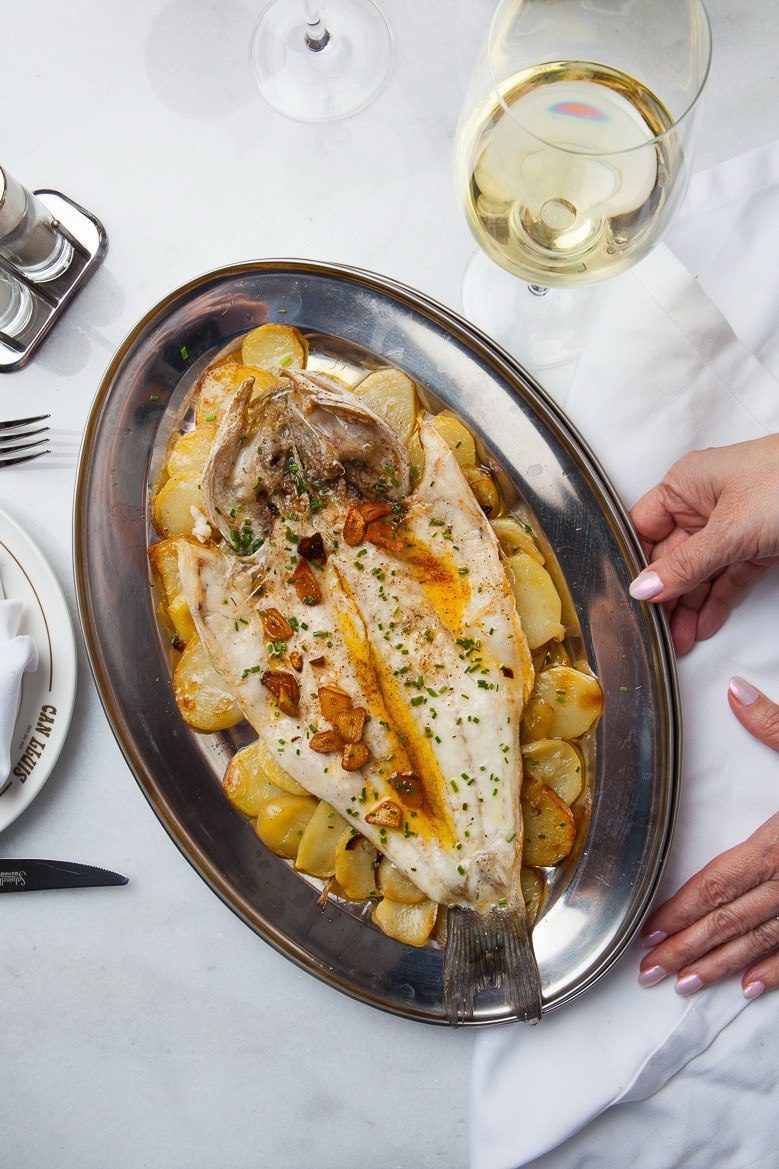
We open the sea bass along the back, roast it on a bed of potatoes and, straight from the oven, pour over hot olive oil with sliced garlic and chilli. Simple, and full of the sea.
Fish cooked “a l’esquena”, opened along the back, is one of the classic ways of Catalan seafood cooking: the fish is split in two, cooked quickly and finished with freshly fried garlic and chilli. It is the cooking of La Barceloneta, Barcelona’s fishermen’s quarter, where seafood restaurants have served it this way for generations.
We slowly simmer the monkfish in its own juices with mussels and red prawns, and serve it in a clay pot.
Suquet is the dish of the fishermen of the Catalan coast: they cooked it on the boat or on the beach, with the catch of the day and little else. The name comes from «suc», juice: the sauce left at the bottom of the pot, eaten by dipping bread in it. It is one of the great seafood dishes of Catalonia.
The Can Lluís rice is made on Thursdays only, with seasonal market produce. Minimum two people; the price follows the weekly special.
Rice in a clay pot is grandmother’s cooking: every district and every home has its own version. In Catalonia rice has mostly been cooked in an earthenware cassola; the flatter paella, which gives a drier rice, came in through the Ebro lands from Valencia, whose people spread rice growing here.
The dish became popular in the 19th century, when groups of friends from Barcelona went out of town to eat together and cooked it outdoors. Inland it carries pork ribs, often botifarra and, in season, artichoke.
They all share two secrets: a slow sofregit with plenty of well-caramelised onion, and a picada added at the end – hazelnut, almond, saffron and garlic – that perfumes and binds the grain.
Cuina catalana by Borja Sierra and Òscar Gómez (Montagud Editores).
Toasted bread with melted dark chocolate, a drizzle of extra virgin olive oil and a few flakes of salt.
A Catalan saying goes: «Pa amb xocolata, lo demés és patarata» – bread with chocolate, and the rest is nonsense. Ever since chocolate arrived from the Americas, a piece of bread with a square of chocolate has been almost everyone’s childhood breakfast or afternoon snack in Catalan-speaking lands.
It was also a remedy after a bad moment. Josep Pla tells how, at an 1892 fancy-dress ball at Barcelona’s Llotja, the writer Pompeu Gener, dressed as the Marquis of Pescara, got stuck in the door of a horse-drawn carriage; to revive him he was given a bread roll with a square of Amatller chocolate.
In Ibiza and Formentera people drizzle the bread with olive oil – the same touch we add, with a little salt.
Història de la cuina catalana i occitana by Vicent Marqués, vol. VIII.
We serve fresh goat’s mató with pumpkin jam and walnuts. A simple dessert to round off the meal with the taste of the Catalan countryside.
Mató is a traditional Catalan fresh cheese: gently curdled milk, unaged and traditionally made without salt. It is eaten as a dessert, and «mel i mató» (honey and mató) is one of the classics of Catalan cooking. Ours is made from goat’s milk from Rasquera, in the Terres de l’Ebre.
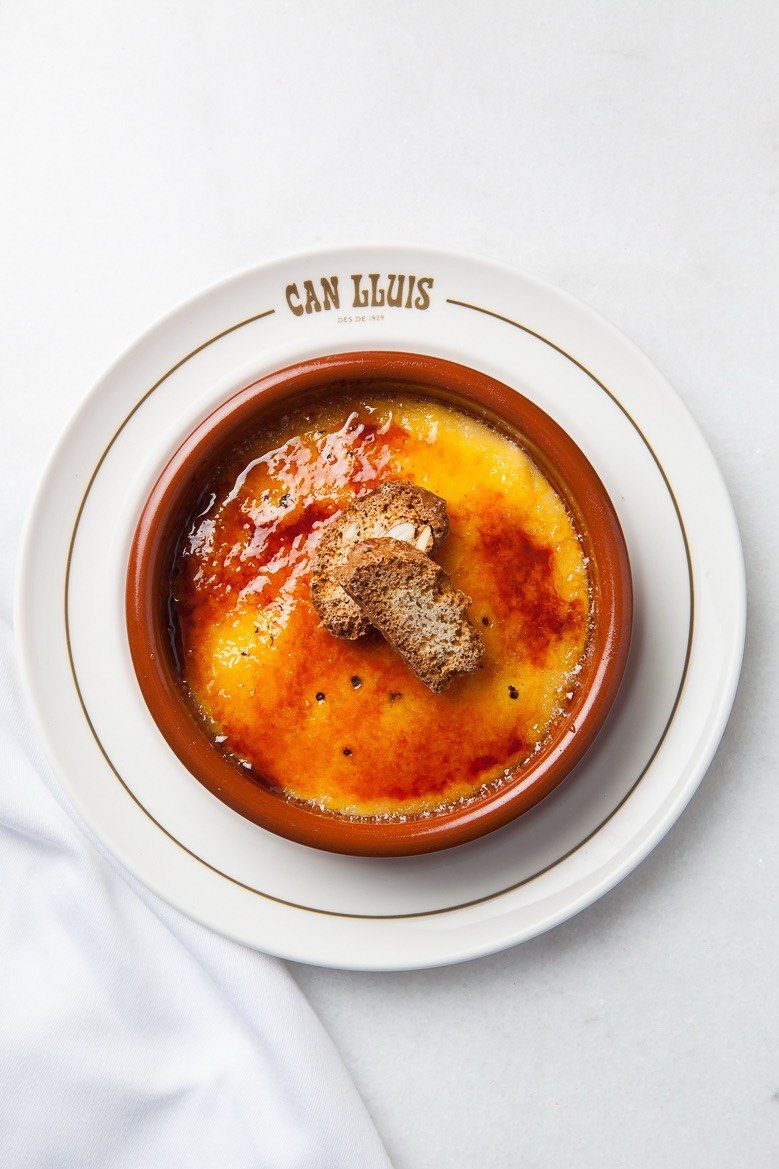
We infuse milk and cream with cinnamon stick and lemon peel, then thicken it with egg yolks only, sugar and a touch of starch over a very low heat. We serve it in an earthenware dish, with the sugar burnt to order so the crust cracks, and with artisan carquinyolis, crisp almond biscuits from La Sénia in the Terres de l’Ebre.
Nobody knows exactly where crema catalana began, but it goes back a long way: a Catalan cookbook from the fourteenth century already has milk cooked with eggs. In the eighteenth and nineteenth centuries it was a dessert for feast days in well-off homes, eaten with sponge fingers.
In time it reached every table and became the set dessert for Saint Joseph’s Day, 19 March, which gave it its other name: crema de Sant Josep. The feast falls in the middle of Lent, when households had milk and eggs to spare, and it was the grandmothers who made it and burnt the top with a red-hot iron.
What makes it Catalan is in the detail: yolks only, scented with cinnamon and lemon rather than vanilla, under a crust of burnt sugar that has to be very thin. The pleasure is the contrast: cold underneath, hot and crisp on top. Manuel Vázquez Montalbán said that, faced with what Catalans can do with milk, you have to take your hat off.
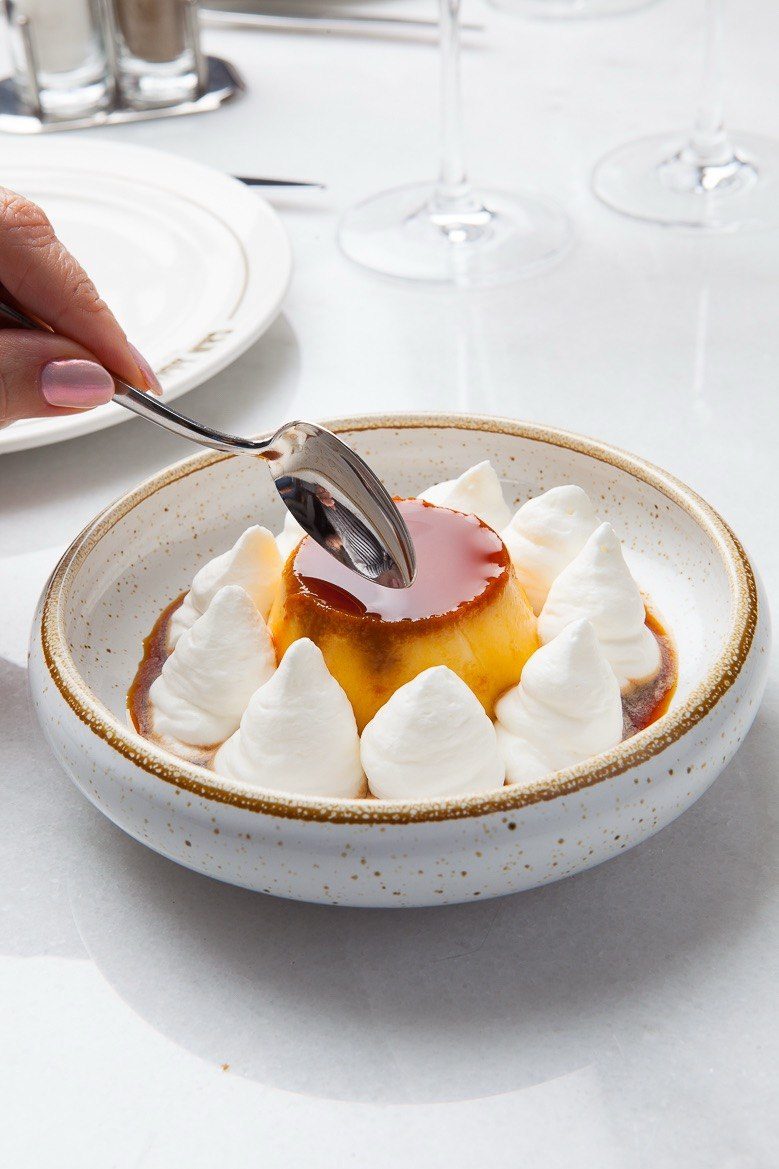
We make it in house with cream, whole eggs and yolks, and a touch of condensed milk, which is what makes it so creamy. The caramel is ours too. We steam it slowly so it sets smooth, with no bubbles, and serve it ringed with whipped cream.
Contains egg and milk. If you have an allergy, please tell our staff.
Flan is made all over the world, and every country has its own way: in France it is crème caramel, in Mexico it takes condensed milk and in Colombia, coffee. In Northern Catalonia it is called pa d’ou, “egg bread”.
The first written recipes for flan date from the mid-18th century. According to the food historian Jaume Fàbrega, it was originally made with bread, and was closer to a pudding. The classic Catalan recipe, as recorded by the chef Josep Lladonosa, uses milk, eggs, sugar, cinnamon and lemon peel, cooked in a bain-marie.
Over time it became the dessert of choice in restaurants serving popular, traditional cooking. It even left a saying in Catalan: “estar fet un flam”, to be like a flan, means to be shaking with nerves.
We serve it by the slice with red berries and a fruit coulis.
In Catalonia, fresh cheese with honey, mató, is a time-honoured dessert. Cheesecake is its more modern cousin and has earned a place on Barcelona menus. At Can Lluís we have made it the house’s sweet signature.
Homemade flan with its caramel, a scoop of chocolate ice cream, whipped cream and chocolate sauce, toasted flaked almonds and a touch of Cointreau. And on top, the cherry, as always.
In the late seventies the TV series «Sandokan», starring Kabir Bedi, swept across Spain. The house named this dessert after it, and it became a legend.
Longtime guests remember it: for many it was their favourite dessert. A regular asked us to bring it back, and it is on the menu again.
Contains alcohol (Cointreau). Contains egg, milk and nuts (almond).
Artisan ice cream by Sandro Desii. Flavours: vanilla, chocolate, carquinyoli, lemon and mandarin.
In Catalonia the classic homemade ice cream was «mantecado», a custard ice cream of milk, egg yolks and sugar, scented with lemon peel and cinnamon just like crema catalana. It was beaten several times as it froze to keep it creamy.
It was served in scoops with rolled wafers (neules), or with chocolate sauce or a splash of liqueur. Its cousin is llet merengada, the summer ice of the horchata bars.
La cuina catalana. 800 receptes by Josep Lladonosa.
A classic that never goes out of style: Seagram’s or Bombay gin, ice-cold tonic and plenty of ice. Simple and unbeatable.
It began as medicine. In the 19th century British soldiers in India took quinine against malaria, dissolved in sweetened soda water – the first tonic. It was so bitter that they started adding gin, and the remedy became the evening cocktail.
More than a century later, Catalonia and the Basque Country reinvented it: a balloon glass, lots of ice and a twist of lemon. Today it is one of Spain’s best-loved drinks.
Irish coffee has always been served at Can Lluís and is one of our guests’ favourite ways to end a meal: warming in winter, reviving in summer.
It was born of bad weather. In the winter of 1943, at Foynes on Ireland’s west coast, where the flying boats left for America, a flight to Newfoundland had to turn back in the middle of the night. To warm the frozen, disheartened passengers, chef Joe Sheridan served them hot coffee with Irish whiskey, sugar and cream.
An American traveller asked if it was Brazilian coffee. «No,» he replied, «that’s Irish coffee.»
In 1952 journalist Stanton Delaplane tasted it at Shannon Airport and took it to the Buena Vista Café in San Francisco. The cream kept sinking; the fix was to whip it lightly – and ever since it has floated on top, cold over hot.
We use our own and third-party cookies to measure how the website is used and for advertising. You can accept them, reject them or choose which ones you allow.


