
Artisan Iberian botifarra with Santa Pau beans and allioli: one of the best-known dishes of Catalan cooking, at Carrer de la Cera, 49.
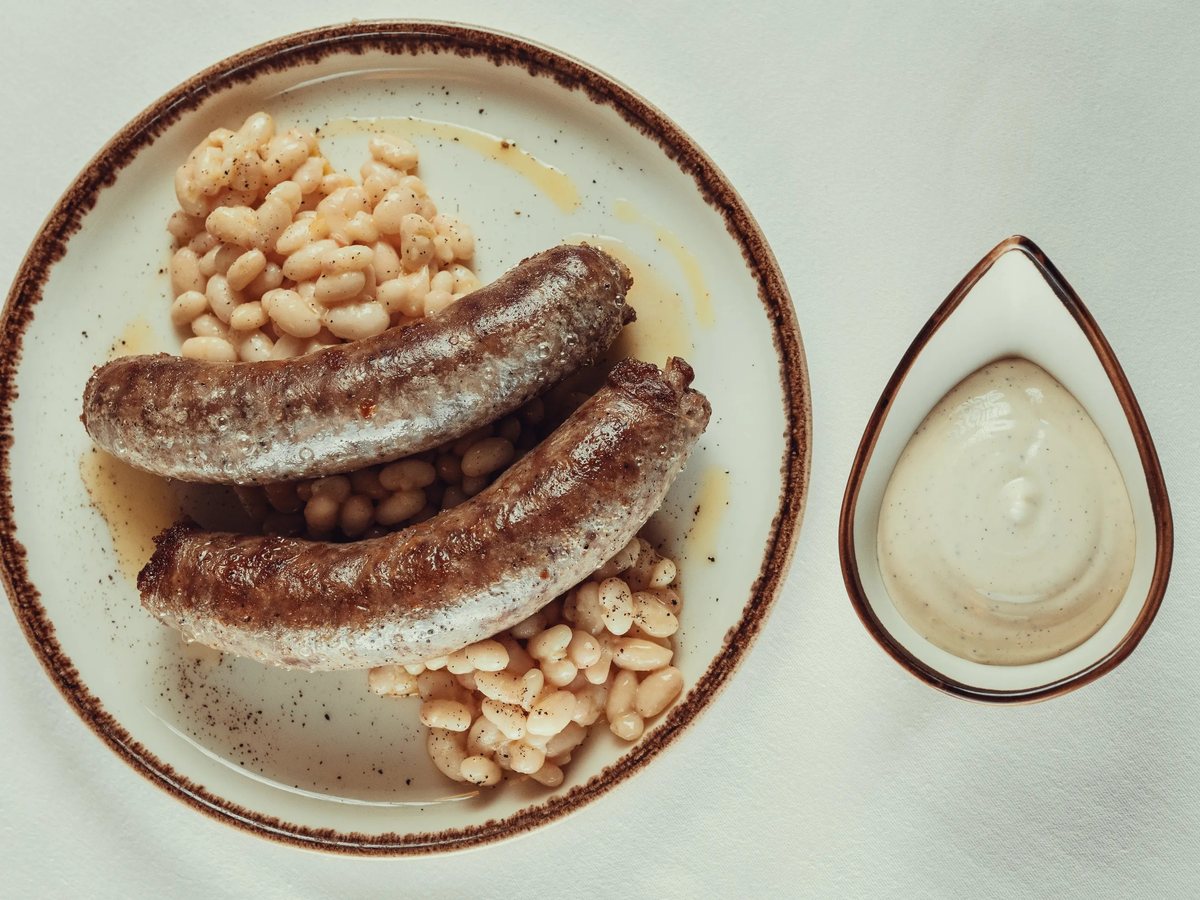
Artisan Iberian botifarra with Santa Pau beans and allioli: one of the most recognisable dishes of Catalan cooking, made from simple farmhouse produce.
€13.50
Raw botifarra, in its purest form, is lean pork seasoned with salt and pepper and nothing else. Fuet, espetec and the llonganissa of Vic all belong to the same family.
In the nineteenth century the beans were usually paired with pork loin, not botifarra. The first written mention of beans with botifarra dates from 1893; since then the dish has become a symbol of Catalan cooking, tied to traditional inns, farmhouses and hearty knife-and-fork breakfasts.
Santa Pau beans grow on the volcanic soils of the Garrotxa: small, tender and thin-skinned, with their own designation of origin. They have been grown there since the eighteenth century.
In the Vallès and the Maresme the dish is made with ganxet beans, small and very thin-skinned, and called «botifarra amb seques». The bean nearly disappeared in the late 20th century and was granted EU Protected Designation of Origin in 2012.
The classic inn-style way: the sausage is fried in pork-belly fat, and the boiled beans are sautéed in the pan until golden – the famous «mongetes saltades» – topped with crackling and parsley.
If you like traditional inn cooking, try the slow-cooked pork cheek with mushrooms (€22.00) or the cap i pota with chickpeas (€18.50).
Further reading: Cuina catalana, by Borja Sierra and Òscar Gómez (Montagud Editores); and La cocina de los mediterráneos, by Manuel Vázquez Montalbán (Ediciones B, 2002).


