
Cap i pota, slow-cooked veal head and trotter stew with chistorra sausage and chickpeas from Sant Antoni. A classic spoon dish on Carrer de la Cera, 49.
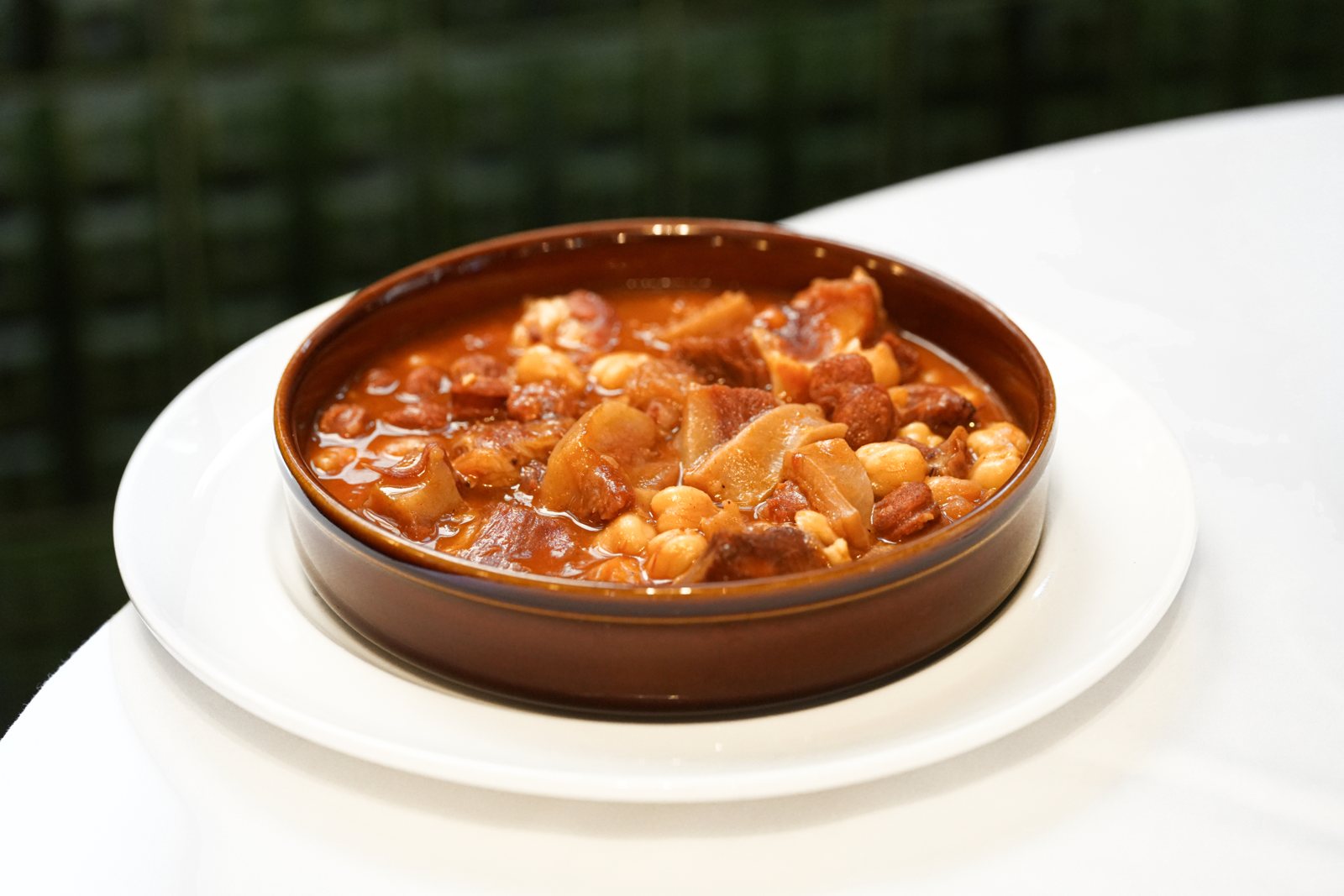
Cap i pota means “head and foot”: tender, gelatinous meat from the parts of the calf that nobody used to want. At Can Lluís we cook it slowly with chistorra sausage and chickpeas from Sant Antoni until the sauce is thick and glossy.
On our menu we call it “iconic since 1929”: it is one of the spoon dishes that define the house.
€18.50
“Traditional cooking is the foundation of everything. You can do different things from there, but always with very clear foundations.”
— Albert Güell, head chef at Can Lluís
Offal (head, trotters, tripe, tongue) has been part of Catalan cooking since the Middle Ages: it appears among the first recipes in medieval Catalan cookbooks. It was the cooking of thrift: when an animal was slaughtered, nothing was thrown away.
The cuts the wealthy did not want became the “esmorzar de forquilla”, the hearty fork breakfast of farmers who went to the weekly markets and stopped at the old inns, the fondes. Cap i pota comes from that world, and together with pig’s trotters it is the most popular offal dish in Catalonia.
The classic recipe starts with a slow sofregit of onion and tomato and finishes with a picada; some cooks use almonds and saffron, others pine nuts and vi ranci. Manuel Vázquez Montalbán, who brought Can Lluís into his Pepe Carvalho novels, gives two versions in La cocina de los mediterráneos: one with samfaina and another with ham, chorizo and chilli.
If you like spoon dishes, try our stewed pig’s trotters with snails (€22.50) or the meatballs with cuttlefish and peas (€16.50).
Further reading: Cuina catalana by Borja Sierra and Òscar Gómez (Montagud Editores); Àpats by Alba Sunyer and Clara Antúnez; La cuina catalana. 800 receptes by Josep Lladonosa (Rosa dels Vents); La cocina de los mediterráneos by Manuel Vázquez Montalbán.


